Peripheral Angioplasty: Restoring Blood Flow to Save Limbs & Improve Quality of Life
Peripheral Angioplasty is a minimally invasive procedure used to open blocked or narrowed arteries in the legs, arms, or other peripheral regions. It is one of the most effective treatments for Peripheral Artery Disease (PAD), helping restore proper circulation, relieve leg pain, and prevent serious complications such as ulcers, infections, and even amputation.
What Is Peripheral Angioplasty?
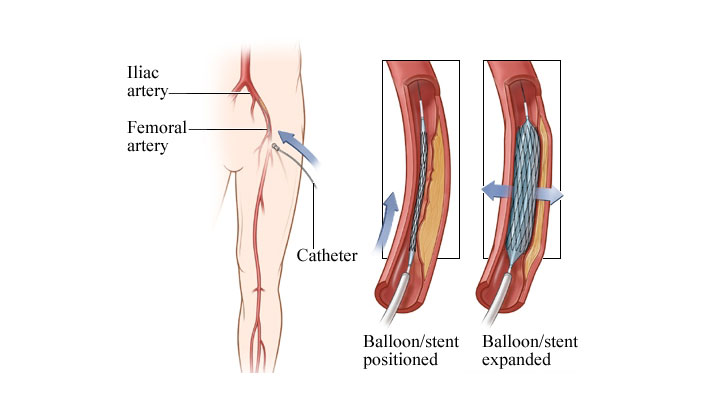
Peripheral Angioplasty is a catheter-based treatment where a tiny balloon is inserted into the blocked artery and inflated to open the narrowed section. In many cases, a stent is also placed to keep the artery open long-term. This procedure improves blood flow to the legs or arms and reduces symptoms like pain, heaviness, and numbness.
When Is Angioplasty Needed?
Your doctor may recommend angioplasty if you have:
- Peripheral Artery Disease (PAD)
- Leg pain or cramping during walking (claudication)
- Rest pain in legs or feet
- Non-healing foot or toe ulcers
- Severe arterial blockages due to smoking or diabetes
- Cold, numb, or discoloured feet
- Critical Limb Ischemia (advanced PAD)
Symptoms That May Require Angioplasty
- Sharp pain or tightness in calves while walking
- Numbness or heaviness in legs
- Darkened or blackish skin patches
- Slow-healing wounds or ulcers
- Burning or tingling sensation in feet
- Cold feet even in warm environments
How Peripheral Angioplasty Is Performed
The procedure is done under local anaesthesia:
- A thin catheter is inserted through the groin or wrist.
- Using X-ray guidance, it is directed to the blocked artery.
- A balloon is inflated to widen the artery.
- A stent may be placed to keep the artery open.
- Blood flow improves immediately after the procedure.
Why Angioplasty Works
Angioplasty restores circulation without major surgery. It opens clogged arteries, reduces pain, improves walking distance, and prevents limb-threatening complications. For patients with diabetes or severe PAD, timely angioplasty can prevent amputation.
Benefits of Peripheral Angioplasty
- Minimally invasive – no major cuts
- Quick recovery and same-day discharge in most cases
- Immediate improvement in blood flow
- Reduces pain and cramping while walking
- Promotes healing of foot ulcers
- Prevents critical limb ischemia and amputation
- Highly effective for diabetic patients
Is Angioplasty Safe?
Yes. When performed by an experienced vascular and endovascular surgeon, angioplasty is extremely safe. Complications are rare and are minimised with modern equipment and careful monitoring.
Our vascular specialist performs advanced balloon angioplasty and stenting using state-of-the-art tools for the best outcomes. If you have leg pain, non-healing foot wounds, or diabetes-related circulation problems, angioplasty may be the most effective treatment.
Peripheral Angioplasty Treatment in Jayanagar – Advanced Vascular Care
At Sugathi Liver & Vascular Clinic in Jayanagar, we provide Peripheral Angioplasty Treatment to restore blood flow in blocked arteries using minimally invasive techniques. Our expert team ensures precise, safe procedures for patients with peripheral artery disease, leg pain, or circulation issues. Quick recovery and effective results make angioplasty a preferred choice for vascular care.
More Services

Dr. Gurunathreddy B
Vascular and Endovascular Surgeon
Peripheral Angioplasty FAQs
Everything You Need to Know
Get answers to the most common questions about angioplasty, recovery, and who needs it.
-
Minimally invasive, quick recovery
-
Effective for diabetic foot and PAD

Is peripheral angioplasty painful?
No. The procedure is done under local anaesthesia; you may feel mild pressure, but it is not painful.
How long is the recovery?
Most patients return home the same day and resume normal activities within 2–3 days.
Does angioplasty prevent amputation?
Yes. In patients with critical limb ischemia or diabetic foot, angioplasty often saves the limb by restoring circulation.
Do all patients need a stent?
No. A stent is used only when the artery is severely narrowed or when ballooning alone is insufficient.

.png)
.png)