ABI (Ankle Brachial Index): A Simple Test for Detecting Peripheral Artery Disease (PAD)
The Ankle Brachial Index (ABI) is a quick, non-invasive diagnostic test used to assess blood flow in the legs. It compares the blood pressure in your ankle to the blood pressure in your arm. ABI is highly effective in detecting Peripheral Artery Disease (PAD) — a condition where narrowed arteries reduce blood flow to the limbs. Early diagnosis through ABI helps prevent serious complications such as leg ulcers, ischemia, and even amputation.
What Is the Ankle Brachial Index (ABI)?
ABI is a simple test that measures how well blood flows in your legs. By comparing ankle and arm blood pressures, it helps identify blockages or arterial narrowing that may lead to pain, reduced mobility, and limb-threatening conditions.
Why Is ABI Done?
Doctors recommend ABI to detect or monitor vascular conditions such as:
- Peripheral Artery Disease (PAD)
- Leg pain while walking (claudication)
- Non-healing wounds on feet or toes
- Coldness, numbness, or discoloration in legs
- Reduced pulses in legs or feet
- Diabetes-related poor circulation
Symptoms That Indicate You May Need ABI
Common symptoms that warrant an ABI test include:
- Leg cramping or pain during walking
- Weak or absent pulses in the feet
- Cold feet or pale skin color
- Slow-healing foot ulcers
- Frequent leg numbness or heaviness
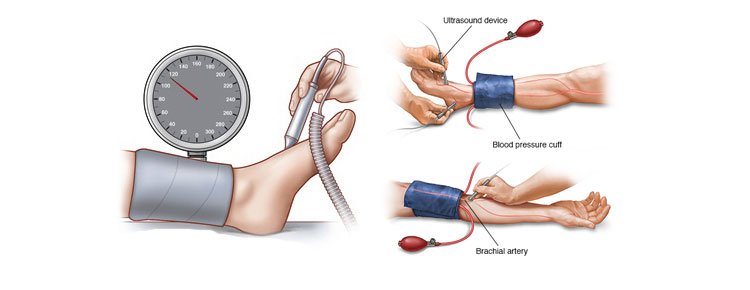
How the ABI Test Is Performed
The ABI test is simple, painless, and completed within minutes:
- A cuff is placed on the arm and ankle to measure blood pressure.
- Using a Doppler device, the doctor listens to blood flow in the arteries.
- The readings are compared to calculate the ABI value.
Understanding ABI Results
- 1.00 – 1.40: Normal circulation
- 0.91 – 0.99: Borderline circulation
- 0.41 – 0.90: Mild to moderate PAD
- 0.00 – 0.40: Severe PAD – urgent treatment needed
Benefits of ABI Testing
- Non-invasive and completely painless
- Quick results within minutes
- Early detection of PAD and vascular issues
- Helps prevent ulcers, infections, and gangrene
- Useful for monitoring diabetic patients
Why ABI Matters
ABI helps detect blood flow problems long before serious symptoms appear. Early diagnosis allows timely treatment, preventing complications such as non-healing ulcers, infections, and limb-threatening ischemia. If you experience leg pain, numbness, or slow-healing wounds, an ABI test can be life-saving.
Our vascular specialist provides accurate ABI testing, expert evaluation, and personalized treatment plans to ensure long-term vascular health. Book your assessment today.
Peripheral Angioplasty Treatment in Banashankari – Advanced Vascular Care
Peripheral angioplasty is a minimally invasive procedure to treat blocked arteries in the legs, improving circulation and reducing pain while walking. At Sugathi Liver & Vascular Clinic in Banashankari, we provide advanced endovascular treatments, including angioplasty, stenting, and laser therapy. Our expert team ensures precise interventions, quick recovery, and long-term vascular health for patients with peripheral artery disease (PAD) and related vascular conditions.
More Services

Dr. Gurunathreddy B
Vascular and Endovascular Surgeon
ABI – Ankle Brachial Index FAQs
Clear Answers to Common Queries
Learn how ABI helps detect circulation issues early and why it’s a crucial test for patients with leg symptoms or diabetes.
-
Quick, painless vascular assessment
-
Reliable indicator of PAD severity

Is ABI painful?
No. ABI is completely painless and non-invasive, using simple blood pressure cuffs and Doppler measurements.
How long does an ABI test take?
The test usually takes about 10–15 minutes, and results are available immediately.
Can ABI detect early PAD?
Yes. ABI is one of the most reliable early screening tools for detecting reduced blood flow and early-stage PAD.
Who should get an ABI test?
People with diabetes, smokers, those with leg pain, non-healing wounds, or individuals over 50 with risk factors should undergo ABI screening regularly.

.png)
.png)