Magnetic Resonance Angiography (MRA): Detailed Soft Tissue and Vascular Imaging
Magnetic Resonance Angiography (MRA) is an advanced, non-invasive imaging technique that uses powerful magnets and radio waves to create highly detailed images of blood vessels, soft tissues, organs, and nerves. Unlike X-rays or CT scans, MRA does not use ionizing radiation, making it especially useful for repeated imaging and for evaluating complex vascular and neurological conditions with exceptional clarity.
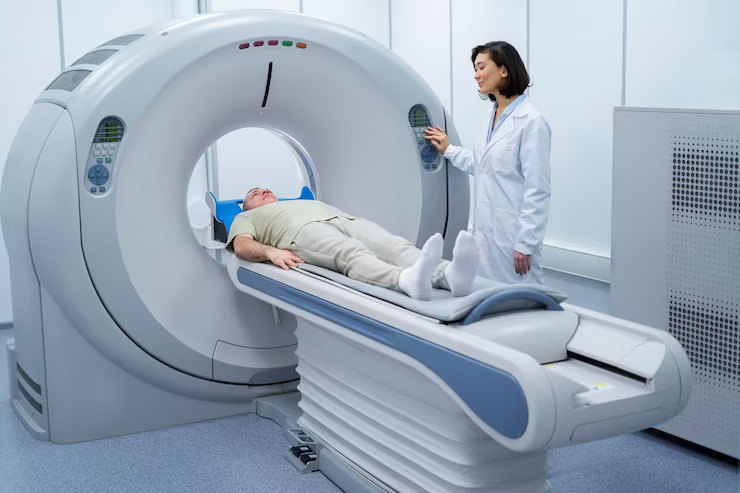
What Is Magnetic Resonance Angiography (MRA)?
MRA uses a strong magnetic field and radiofrequency pulses to generate detailed cross-sectional images of the body, especially the vascular system. In vascular practice, Magnetic Resonance Angiography helps assess blood vessels, blood flow, soft tissues, and surrounding structures without catheter-based procedures or radiation.
Why Is MRA Recommended?
Your doctor may recommend MRA to evaluate:
- Blood vessels in the neck (carotid arteries) and brain
- Aneurysms, dissections, and vascular malformations
- Spine, nerves, and soft tissue structures
- Blood clots in veins (MR Venography)
- Organ involvement in complex vascular disease
- Follow-up after vascular surgery or endovascular procedures
Symptoms and Conditions Where MRA Helps
MRA may be advised if you have:
- Neurological symptoms such as weakness, speech difficulty, or visual changes
- Suspected stroke, TIA, or carotid artery disease
- Unexplained limb pain, numbness, or nerve-related symptoms
- Back or neck pain with suspected nerve compression
- Evaluation of known aneurysms, vascular malformations, or prior stents/grafts
How MRA Is Performed
MRA is safe, painless, and usually takes 20–45 minutes depending on the region being scanned:
- You will be asked to lie still on a motorized table that slides into the MRA scanner.
- The scanner makes loud tapping or humming sounds; earplugs or headphones are provided.
- In some cases, a contrast agent may be injected to enhance blood vessel visibility.
- The technician monitors you throughout the scan and you can communicate anytime through an intercom.
What MRA Results Can Show
- Detailed soft tissue images of brain, spine, organs, and muscles
- Clear visualization of arteries and veins through advanced MR angiography
- Narrowing, blockages, or aneurysms in blood vessels
- Inflammation, clots, or structural abnormalities
- Post-treatment changes after surgery, stenting, or bypass
Benefits of MRA in Vascular and Neurological Care
- No ionizing radiation exposure
- Highly detailed vascular and soft tissue imaging
- Excellent for stroke, TIA, and carotid disease evaluation
- Helps plan complex vascular and neurosurgical procedures
- Useful for follow-up without radiation exposure
Is MRA Safe for Everyone?
MRA is very safe for most patients. However, because it uses a strong magnet, it is not suitable for individuals with certain metal implants, pacemakers, or metallic foreign bodies. Before the scan, you will be asked about prior surgeries, implants, and any history of metal exposure. Our team ensures all safety checks are completed before proceeding.
With advanced MRA technology and expert interpretation, we provide accurate, radiation-free imaging to guide precise diagnosis and treatment. If you have been advised MRA or have symptoms needing detailed evaluation, schedule your scan with our specialist team today.
Best MRA Scan Center in Jayanagar – Accurate Vascular Imaging
At our Best MRA Scan Center in Jayanagar, we offer precise, non-invasive Magnetic Resonance Angiography (MRA) to visualize arteries and veins. This advanced imaging helps detect vascular blockages, aneurysms, and circulation issues early, enabling timely intervention and effective treatment. Our experienced team ensures patient comfort, safety, and high-quality diagnostic results.
More Services

Dr. Gurunathreddy B
Vascular and Endovascular Surgeon
MRA – Magnetic Resonance Angiography FAQs
Common Questions, Clear Answers
These FAQs explain how MRA works, what to expect during the scan, and how it supports accurate vascular and neurological diagnosis.
-
Radiation-free, detailed vascular imaging
-
Ideal for brain, spine, and blood vessel evaluation

If you’ve been advised MRA
or need detailed vascular imaging,
book your scan with us
Is MRA safe?
Yes. MRA does not use radiation and is considered very safe for most patients. However, people with certain metal implants, pacemakers, or cochlear implants may not be suitable and will be evaluated individually.
How long does an MRA scan take?
Depending on the body part being scanned, an MRA usually takes about 20–45 minutes. More detailed or multiple region scans may take slightly longer.
Will I feel anything during the MRA?
MRA itself is painless. You may hear loud tapping or humming sounds from the machine, which is normal. Earplugs or headphones are provided to keep you comfortable.
What if I am claustrophobic or anxious?
If you are anxious or claustrophobic, inform the team in advance. We can offer reassurance, brief breaks, and in some cases mild sedation if required. Modern MRA scanners are more spacious and designed for patient comfort.

.png)
LOCATE
.png)

CALL

APPTOINTMENT